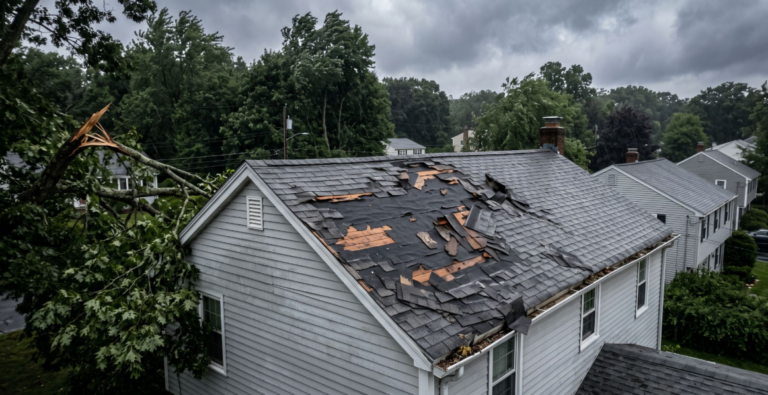
Connecticut storms, including high winds and hail damage, can cause serious roof damage overnight, and the steps you take in the first 24 hours directly affect the outcome of your roof insurance claim. What you do first matters more than most homeowners realize.
Unfortunately, most homeowners make the same costly mistake: they call their insurance company before getting a roofing contractor’s eyes on the damage, which can leave them with a weaker claim and less insurance coverage. At DiGiorgi Roofing & Siding, we guide Connecticut homeowners through every stage of the storm damage insurance claims process. Next, we will outline the correct sequence of steps so you can protect your home, your homeowners insurance claim, and your peace of mind, starting with a professional roof inspection.
Table of Contents
ToggleWhy You Should Call a Contractor Before Your Insurance Company
Insurance Adjusters Work for the Insurer, Not for You
It is important to understand whose interests an insurance adjuster represents. An insurance adjuster’s primary role is to evaluate damage on behalf of the insurance company, which can result in undervalued or denied roof insurance claims. This is not a knock on adjusters personally; it is simply how the home insurance claims process works.
Without independent documentation, you have no baseline to challenge a low settlement offer. If the adjuster’s estimate comes in short, you are negotiating from memory and guesswork rather than a professional record.
Having a contractor on your side changes that dynamic entirely. It creates an advocate who understands roofing systems and can point out damage an adjuster may overlook, giving you a knowledgeable partner in a process that can otherwise feel one-sided. Some homeowners also bring in a public adjuster to negotiate directly with the insurance company, but a contractor’s documentation gives that negotiation a much stronger starting point either way.
In short, calling a contractor first helps because:
- An adjuster evaluates damage for the insurer, so claims can come in undervalued or denied.
- Without independent documentation, you have no baseline to challenge a low offer.
- A contractor becomes your advocate, spotting damage the adjuster may overlook.
Professional Documentation Strengthens Your Claim from the Start
Documentation is the foundation of a strong claim. A contractor’s written record and thorough damage assessment establish a clear account of storm-related damage and the roof’s condition before any temporary repairs alter it.
This matters because insurers are more likely to approve claims that arrive with organized, professional documentation from a licensed roofing contractor. A well-documented claim signals that the damage is real, thoroughly assessed, and clearly tied to a covered peril, which reduces the friction that leads to disputes and delays. Solid documentation can also help establish that the damage came from wind or hail rather than flooding, since flood insurance is typically a separate policy that standard homeowners coverage does not include. In short, good damage documentation up front tends to mean a smoother, fuller settlement later.
Early Contractor Involvement Prevents Claim Underpayment
Storm damage is not always visible from the ground. An experienced roofer can spot issues an untrained eye would miss entirely.
Commonly overlooked storm damage includes:
- Damaged or lifted flashing around chimneys, skylights, and vents.
- Compromised underlayment beneath the surface shingles.
- Granule loss that signals shingles are nearing the end of their life.
This hidden damage is exactly what gets left out of underpaid claims. Insurers may also try to attribute it to routine roof maintenance or ordinary wear and tear rather than the storm itself, which is why independent documentation matters so much. If it is not documented up front, it often does not get covered, and you discover it only later when a roof leak appears, water damage spreads, or the roof fails prematurely.
Homeowners who work with a contractor from the beginning are better positioned to negotiate if the initial settlement falls short of what their dwelling coverage should provide. That early involvement can be the difference between a fully covered repair and a shortfall you pay for yourself.
DiGiorgi's Four-Step Roof Insurance Claims Process
Step One: Get DiGiorgi to Your Roof Right Away
The first move is the most important one. Contact DiGiorgi as soon as it is safe to do so after a storm event in Connecticut to set up a free consultation with a roofing specialist, before you call your insurer and before you climb up to look yourself. During that consultation, our team takes a look at the storm damage as a natural part of talking through your roofing options. This gives you an informed perspective on what you are dealing with before you ever talk to your insurance company, so you enter the process knowing the true scope of the damage. You can reach us any time through our contact page.
Step Two: File Your Roof Insurance Claim with Full Documentation in Hand
Once you understand the damage, you can contact your insurer with a complete picture rather than relying solely on the adjuster’s findings. Going in informed puts you on much stronger footing from the very first conversation.
DiGiorgi can help you understand your insurance policy language, including whether your coverage is based on Actual Cash Value or replacement cost value. We can also walk you through how recoverable depreciation or a roof endorsement in your policy might affect your final payout, so you know what to expect during the claims review. Submitting organized documentation at the time of filing reduces back-and-forth delays and speeds up claim approval, since the insurer has what it needs to evaluate the claim right away.
Step Three: DiGiorgi Works Alongside Your Insurance Adjuster
DiGiorgi has extensive experience collaborating with insurance adjusters on Connecticut roof claims and can meet the claims adjuster on-site during their visit. That face-to-face presence keeps everyone working from the same set of facts.
Having a contractor present helps ensure that no damage is overlooked and that the adjuster’s scope matches the documented findings. We communicate directly with the insurance team to resolve discrepancies quickly and keep the process moving forward, so you are not stuck playing middleman between your contractor and your insurer.
Step Four: Repairs Begin Once Your Claim Is Approved
With the claim approved, the work can finally begin. DiGiorgi coordinates roof repair or roof replacement work in alignment with your approved claim amount, ensuring no surprises when the invoice arrives.
All work is completed to Connecticut building code standards using quality roofing materials that meet or exceed insurer requirements, whether the job calls for roofing or new siding. Where ordinance and law coverage applies, we also make sure any required code upgrades are included in your claim. We handle the final documentation so your claim can be closed cleanly and your home is fully protected against the next storm.
Protect Your Roof Insurance Claim and Your Home: Call DiGiorgi the Moment Storm Damage Strikes
The window to protect a storm damage roof claim is narrow. Connecticut’s statute of limitations and most insurers’ own filing deadlines mean every hour without professional documentation puts your settlement at risk. Temporary repairs, shifting weather, and fading evidence can all weaken a claim as time passes.
DiGiorgi has helped Connecticut homeowners navigate roof insurance claims from the first phone call through final repair, serving as a trusted guide at every step. We know how local storms damage roofs and how Connecticut insurers evaluate the resulting claims.
Do not call your insurance company first. Call DiGiorgi, get the documentation you need, and go into the claims process with confidence and professional support behind you. Contact DiGiorgi today to get your storm damage documented and let an experienced Connecticut roofing contractor protect your home and your roof insurance claim from start to finish.