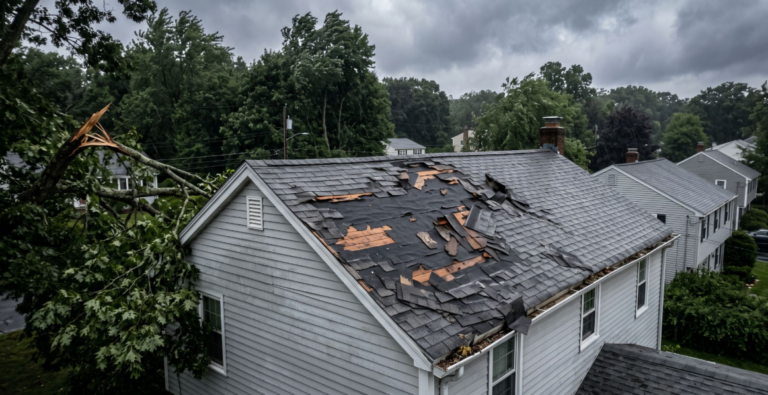
Most homeowners focus on the one exterior problem they can actually see. Drafty windows, faded siding, a stain on the ceiling. What they often miss is that the rest of the system may be quietly failing.
A home’s exterior is not a collection of independent parts. It functions as an interconnected wall system, where one weak link can compromise every other improvement you make, no matter how much you spent on it.
Next, we will explain why the “just replace the windows” mindset often leads to wasted investment, and how a whole-exterior approach protects your home more completely than targeted upgrades made in isolation. It also covers how DiGiorgi looks at the whole system when we come out to quote your problem, so nothing gets missed and every upgrade performs as intended. That perspective shapes all of our exterior renovations.
Table of Contents
ToggleThe Most Common Weak Links That Undermine Single-Component Upgrades
Three problems show up again and again on homes where a recent upgrade is already underperforming. In each case, the homeowner did nothing wrong except look at one component instead of the whole assembly.
The usual culprits:
- Siding gaps and deteriorating trim that let wind-driven rain into the wall cavity.
- Aging or improperly installed flashing at rooflines, dormers, and openings.
- Failing or undersized gutters and downspouts that dump water where it does the most damage.
What these share is position. Each sits at a transition point where two systems meet, and transitions are where building envelopes fail.
Siding Gaps and Deteriorating Trim
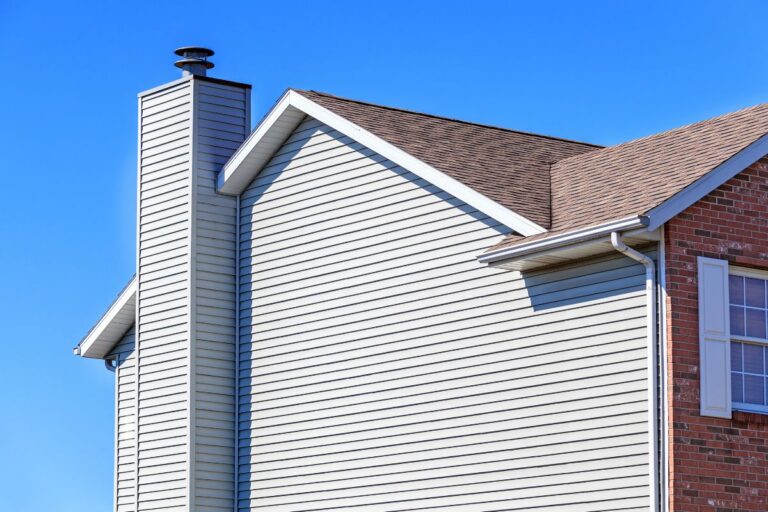
Small gaps in siding boards or around corner trim compromise the weather barrier and let wind-driven rain penetrate the wall cavity instead of running down the drainage plane the way it’s designed to. That leads to mold, rot, and insulation degradation behind brand-new windows, undoing the benefit you just paid for. Compromised siding undermines everything installed near it.
Older wood trim that is soft, cracked, or pulling away from the substrate gives insects and moisture an entry point that no energy-efficient window replacement can seal off. In a coordinated home renovation, siding and trim conditions are evaluated alongside window performance so the same project plan addresses all vulnerabilities.
Improper or Aging Flashing Around Rooflines and Openings
Step flashing along dormers and sidewalls is particularly prone to lifting and separation over time, especially where temperature swings drive repeated expansion and contraction. Flashing is also the easiest thing to skip past, because once siding goes on, nobody can tell whether it was corrected or simply concealed.
When contractors install new siding without inspecting the existing flashing, they may cover the problem instead of correcting it, shortening the lifespan of the new material. DiGiorgi’s whole exterior approach includes a flashing audit at every roof-to-wall and opening transition, so new installations have a sound foundation beneath them.
Failing or Undersized Gutters and Downspouts
Overflowing gutters dump water directly against the foundation and lower siding courses, accelerating decay in exactly the areas that are most expensive to repair.
Gutters and downspouts are part of the home’s drainage systems, and when they’re too small for the roof’s drainage area, or when they sag and pull away from the fascia, they transfer stress and moisture to the boards they’re mounted on. Upgrading siding without addressing gutter performance means the new material starts taking on water damage almost immediately.
Downspout placement is part of the same calculation. Water routed only a few inches from the foundation still ends up exactly where you don’t want it, no matter how well the gutters perform.
What a Whole Exterior Approach Actually Looks Like in Practice
A Whole-System Look When We Come Out to Quote
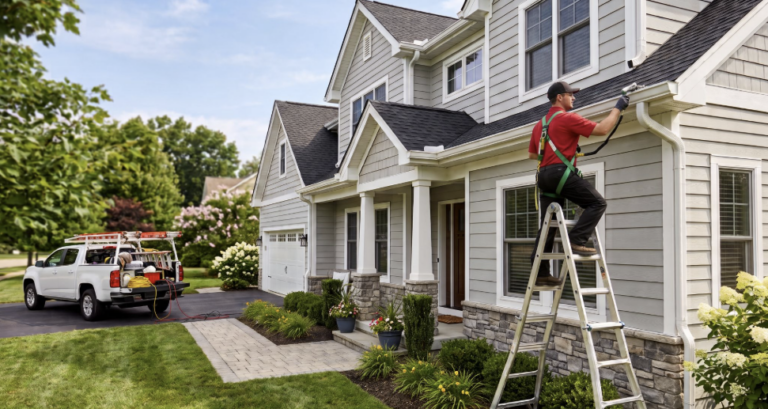
DiGiorgi Roofing & Siding does not send crews to browse a house for problems. A homeowner calls about a specific issue, and we come out to look at it and provide a quote.
The difference is what that visit covers. We examine how the problem connects to the rest of the exterior system, including roofing, siding, windows, doors, garage doors, gutters, flashing, and trim, rather than pricing the visible issue in isolation.
That means identifying not just the component you called about, but the underlying conditions that may have caused or worsened it. You come away with a clear picture of your exterior’s current state, which lets you prioritize intelligently and plan phases if the budget calls for a staged approach.
Phasing is a perfectly reasonable path, and knowing the full picture is what makes it work. The point is to choose the order deliberately rather than discover the rest of the problem a year later.
Coordinated Home Renovation Scheduling Across Trades and Materials
When multiple components need work, sequencing becomes as important as the work itself. Doing the right things in the wrong order can mean tearing out finished work to reach what’s underneath.
A coordinated home renovation delivers:
- Roofing, siding, and window crews sequenced so each trade sets up the next one for success.
- Material selections reviewed together, from James Hardie fiber-cement siding to architectural shingles, so profiles, colors, and thicknesses stay compatible.
- Single-point project management, with one local team accountable for the finished result.
- Fewer communication gaps than multi-contractor projects typically create.
The material compatibility piece is easy to underestimate. Siding profiles, trim thicknesses, and color families purchased separately at different times rarely line up as cleanly as they would if selected together.
Documentation and Quality Checkpoints Throughout Installation
The most important parts of an exterior project are the ones you never see again once the finished material goes on. Documentation is how you know they were done right.
Our documentation process includes:
- Photo documentation at each stage, capturing flashing, moisture barrier lapping, and substrate condition before covering them.
- Quality checkpoints at transition zones where siding meets rooflines and windows meet framing.
- Verification that every interface is sealed and compliant before the next layer goes on.
- A record that supports both manufacturer warranty requirements, including programs like the Everlast Warranty, and your own confidence in the work.
This record also has practical value years later. If a warranty question ever comes up, the evidence of correct installation already exists rather than having to be reconstructed.
Stop Patching and Start Protecting: Call DiGiorgi About the Problem You're Seeing
A single-component fix rarely solves the underlying system problem. More often it just relocates where the next failure will appear, costing more money and causing more disruption over time.
Homeowners end up paying for the same square footage twice: once for the upgrade, and again for the repair when the untouched weak link finally gives way.
The smarter path is a whole exterior approach grounded in building science, one that evaluates every component together, addresses vulnerabilities in a coordinated sequence, and delivers lasting performance across the full building envelope. It is also usually the less expensive path over any meaningful stretch of time, and it protects the home equity you’re building with every improvement.
Our consultation process, triggered by the issue you call in, gives homeowners a fuller picture of their exterior’s condition, a clear priority plan, and expert guidance on protecting curb appeal and the investment long term. Contact DiGiorgi today about the exterior problem you are noticing, and see firsthand why a coordinated, whole-system approach to that quote outperforms any piecemeal fix.