Most homeowners do not ignore their home’s exterior on purpose. A loose shingle, clogged gutter, or cracked piece of siding can seem minor, especially when budgets are tight or life gets busy. It is easy to put off home maintenance until next season.
The problem is that your home’s exterior is not made up of independent parts. Your roof, gutters, siding, windows, flashing, soffits, fascia, and foundation all work together as one protective system. When one component begins to fail, it places added stress on the systems around it, creating a chain reaction that can quickly lead to expensive repairs. Next, we will explore real-world examples of how a single exterior problem can trigger widespread damage, and how proactive exterior maintenance helps stop the domino effect before it starts.
Table of Contents
ToggleHow Your Home's Exterior Systems Work Together
Every exterior component has a specific job, but each depends on the others to perform properly. Your roof sheds water, gutters move it safely away from the home, siding protects the wall assembly, and flashing seals vulnerable transition points around windows, doors, chimneys, and roof penetrations.
Think of it like links in a chain. When one system fails, the surrounding materials absorb additional moisture, stress, or wear that they were never designed to handle, and the weakness spreads outward from there.
Understanding these connections helps homeowners recognize why early exterior repairs are almost always less expensive than waiting for visible interior damage. By the time a problem shows up on your ceiling or walls, it has usually been developing out of sight for a while.
Scenario 1: A Failing Roof Triggers Interior and Foundation Damage
The Initial Problem
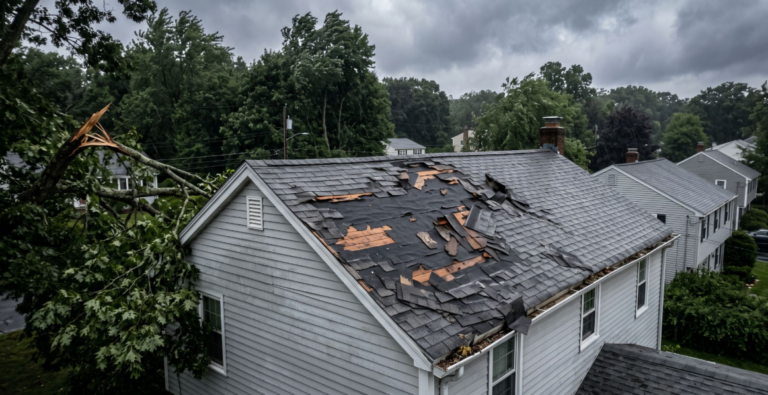
It often starts small and out of sight. Missing, cracked, or curling shingles expose the underlayment to UV radiation and water intrusion, while damaged flashing around chimneys, skylights, and roof penetrations creates common entry points for slow leaks that, left unresolved, can eventually require costly chimney repair. Repeated temperature swings between hot and cold seasons also cause shingles to expand and contract, accelerating this kind of seasonal damage. Many roofing problems develop long before homeowners notice stains or other interior symptoms.
The Domino Effect
Water entering through the roof saturates attic insulation, reducing energy efficiency and increasing heating and cooling costs. Continued moisture promotes mold growth inside attic spaces and wall cavities.
From there, water travels down framing members, eventually reaching lower walls and pooling around the foundation, which increases the risk of foundation water damage. Nearby soffits and fascia may also begin to deteriorate as moisture spreads beyond the original leak.
Warning Signs Homeowners Should Watch For
A quick look around the house, or a professional roof inspection, can reveal an early-stage roof problem before it spreads.
- Missing shingles or exposed nail heads.
- Granules collecting in the gutters.
- Ceiling stains or peeling paint.
- Damp attic insulation or musty odors.
Scenario 2: Damaged Gutters Undermine Siding and the Foundation
The Initial Problem
Clogged gutters filled with leaves or debris overflow during rainstorms. Sagging or detached gutters prevent water from draining away from the home properly, and downspouts that discharge too close to the foundation can create drainage problems that let water collect where it should not.
The Domino Effect
Overflowing water repeatedly saturates fascia boards, causing rot and weakening attachment points throughout the gutter system. Water running down exterior walls then penetrates siding joints and trim.
Excess moisture behind the siding encourages mold growth and wood rot inside the wall assembly. Repeated pooling around the foundation increases the risk of soil erosion, settling, basement leaks, and foundation cracks.
Warning Signs Homeowners Should Watch For
Gutter trouble tends to announce itself during and after heavy rain.
Routine gutter cleaning, or installing gutter guards, can help prevent this cycle before it starts.
- Gutters overflowing during rain.
- Peeling paint on fascia or trim.
- Water pooling near the home's foundation.
- Mold or algae streaks on the siding.
Scenario 3: Deteriorating Siding Opens the Door to Structural Damage
The Initial Problem
Cracked panels, loose boards, failed caulking, and damaged trim allow moisture behind the exterior cladding. Bubbling paint, discoloration, or soft spots often indicate hidden moisture intrusion already exists, and small gaps around windows and doors let wind-driven rain bypass the siding entirely.
The Domino Effect
Moisture penetrates the house wrap and sheathing, materials designed to resist occasional moisture but not prolonged exposure. Wet sheathing then weakens the structural connection between the framing and the exterior cladding.
Windows, trim, and insulation may also become damaged as moisture spreads throughout the wall assembly. Left unaddressed, localized siding repairs can become full wall reconstruction projects.
Warning Signs Homeowners Should Watch For
Siding problems often show up as subtle changes in appearance or comfort inside the home.
- Warped or buckled siding.
- Soft or rotting trim boards.
- Interior paint bubbling near exterior walls.
- Increased drafts or higher energy bills.
The Real Cost of Deferred Exterior Home Maintenance
The math on deferred maintenance rarely works in the homeowner’s favor. Replacing a few damaged shingles or repairing a section of gutter costs far less than the home repairs needed once mold damage, structural framing, or foundation problems set in.
Preventive maintenance keeps one failing system from damaging multiple exterior components, which is where costs truly escalate. A single leak that spreads into framing, insulation, and drywall can multiply a small repair bill many times over.
Addressing problems early also allows homeowners to budget for maintenance instead of facing emergency repairs after significant damage has already occurred. It turns an unpredictable expense into a manageable, planned one, while protecting your investment and your home’s market value over time.
Stop the Domino Effect Before It Starts
Every scenario in this article follows the same pattern: a manageable issue goes unaddressed, adjacent systems absorb the stress, and repair costs multiply. The good news is that this pattern is entirely preventable with a little attention.
Regular exterior house maintenance and prompt repairs help prevent small exterior issues from spreading to other parts of the home. Catching a problem at the shingle or gutter stage keeps it from ever reaching your framing or foundation.
If you have noticed roof damage, failing gutters, or deteriorating siding, addressing the problem early can help protect your home’s structure and reduce long-term repair costs. DiGiorgi provides expert roofing, siding, gutter, window, and exterior remodeling services to help homeowners keep every part of their home’s exterior performing as it should. Contact DiGiorgi for a free consultation to discuss the best solution for your home’s exterior before a small issue turns into a larger repair.