You notice mold forming on your attic rafters, paint peeling on your ceiling below the roofline, or thick ridges of ice building up along your eaves every winter, and the natural assumption is that your roof is failing. But in many cases, the roof itself is not the problem. Poor attic ventilation is one of the most common and most overlooked causes of moisture damage in Connecticut homes, and it creates issues that mimic roof failure while quietly destroying the structure from the inside out.
The connection is direct: roof ventilation controls moisture levels inside the attic, and when ventilation is inadequate, that moisture attacks insulation, sheathing, framing, and shingles simultaneously. Ignoring ventilation shortens roof lifespan significantly, voids manufacturer warranties, and creates conditions for mold growth and structural decay that are expensive to remediate. Next, we will explain how ventilation works, what happens when it fails, and why our team at DiGiorgi evaluates it on every roofing project we complete.
Table of Contents
ToggleHow Roof Ventilation Works and Why It Matters
Roof ventilation is not a one-size-fits-all system. There are multiple ventilation options available to homeowners, including passive solutions like Edge Vents and ridge vents that rely on natural convection, and active solutions like Solar Powered Attic Vents that use fans to mechanically move air through the attic space. The right solution depends on the home’s design, attic configuration, and the specific challenges the property faces.
The basic principle behind every ventilation system is the same: an intake-and-exhaust cycle. Soffit vents installed along the lower edge of the roof draw in fresh, cooler air from outside, while ridge vents, roof vents, or powered exhaust fans at the top of the attic allow hot, moist air to escape. This creates a continuous airflow cycle that regulates attic temperature year-round, not just during summer. In warm months, proper airflow prevents heat buildup that can push attic temperatures well above 150 degrees. In winter, balanced roof ventilation prevents warm, humid air from the living spaces below from condensing on cold roof sheathing, which is exactly how attic moisture prevention works in cold climates like Connecticut.
Key components of a properly functioning roof ventilation system:
- Soffit vents (intake): installed along the eaves to draw cool, dry air into the lower portion of the attic, creating the foundation of the airflow cycle that drives the entire system.
- Ridge vents (exhaust): installed along the roof's peak to allow hot, moist air to escape naturally by convection, working in tandem with soffit intake to create balanced airflow.
- Powered attic vents: solar-powered or electric fans that actively pull air through the attic space, particularly effective in homes where passive ventilation alone cannot achieve adequate airflow due to roof design or attic layout.
- Net free area (NFA): the calculation that determines how much total ventilation area is needed based on attic square footage, roof pitch, and climate conditions. The ratio of intake to exhaust must be properly balanced for the system to function effectively.
Ventilation requirements vary with attic square footage, roof pitch, and regional climate, which is why a professional assessment is so important. Homeowners who want to check whether their own attic is properly ventilated can use the GAF Attic Ventilation Calculator as a starting point, but a hands-on evaluation by a qualified contractor will always provide the most accurate picture.
What Happens When Attic Ventilation Fails
The Moisture Problems Poor Ventilation Creates
When ventilation is inadequate, warm, humid air from living spaces rises into the attic through ceiling penetrations, recessed lighting, bathroom vents, and general air leakage, then condenses on cold roof sheathing during colder months. This condensation leads to wood rot, mold growth, and deterioration of the structural components that hold the roof system together. Attic moisture prevention becomes nearly impossible without adequate airflow, because trapped humidity has nowhere to escape and continues to accumulate with every temperature cycle.
Over time, condensation can saturate insulation, destroying its R-value and transforming what should be a thermal barrier into a wet sponge that accelerates damage rather than preventing it. The consequences extend beyond the attic itself: moisture that reaches the roof deck can migrate into wall cavities and affect siding and exterior wall systems, compounding the damage across multiple components of the home’s envelope.
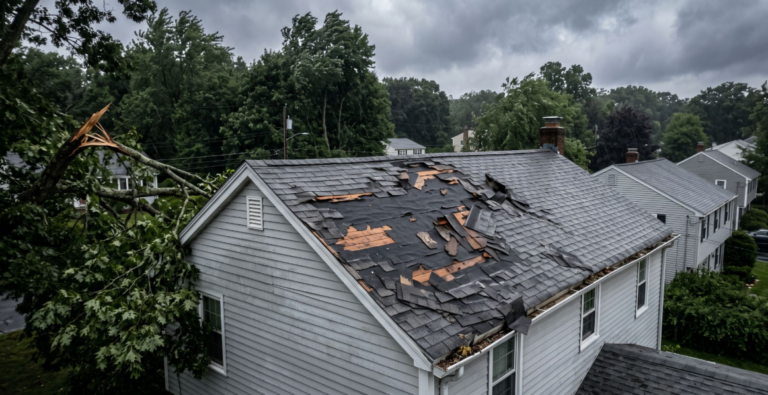
Ice dams deserve special attention for Connecticut homeowners. Poor winter ventilation allows heat to escape unevenly through the roof deck, melting snow on the upper portions of the roof while the eaves remain cold. That meltwater runs down to the cold eaves, refreezes into thick ice ridges, and then forces water backward under the shingles and into the roof deck, causing leaks that damage ceilings, walls, and insulation below. Proper ventilation keeps the entire roof deck at a consistent temperature, which is the most effective way to prevent ice dams from forming in the first place.
The Impact on Roof Longevity and Energy Efficiency
Excessive heat trapped in a poorly ventilated attic does not just cause moisture problems; it also degrades asphalt shingles from the underside, baking the adhesive strips and accelerating granule loss in ways that void manufacturer warranties prematurely. A roof that should last 25 to 30 years may fail in 15 or fewer if the attic below is consistently superheated due to inadequate ventilation.
Warning signs that your attic ventilation may be failing:
- Mold or mildew visible on attic rafters, sheathing, or insulation when you inspect the attic space.
- Ice dams forming along the eaves during winter, indicating uneven heat distribution across the roof deck.
- Peeling or bubbling paint on interior ceilings directly below the attic, which suggests moisture is migrating downward from a poorly ventilated space.
- Energy bills that spike unexpectedly, particularly during summer, as your HVAC system works harder to compensate for an overheated attic radiating heat into the living spaces below.
How DiGiorgi Evaluates Roof Ventilation on Every Project
At DiGiorgi, we treat ventilation assessment as a standard step in every roofing inspection and replacement, not an optional add-on that gets skipped to save time or cut costs. We have seen too many homes where a brand-new roof was installed over a failing ventilation system, and the homeowner ended up with moisture damage, voided warranties, and premature shingle failure within just a few years. That is not how we operate, and it is one of the reasons our roofing projects are designed to last.
DiGiorgi's ventilation evaluation process:
- Measure the attic square footage and calculate the net free area (NFA) required for proper airflow based on the home’s specific dimensions, roof pitch, and Connecticut’s climate conditions.
- Inspect existing intake and exhaust vent placement to identify blockages, imbalances, or areas where insulation, debris, or improper installation is restricting airflow through the system.
- Determine whether the current system is passive, powered, or ridge-vent-based, and recommend upgrades or modifications suited to the home’s specific roof design and attic configuration.
- Provide clear explanations to the homeowner about what we found, what we recommend, and why, so every decision is informed, and every investment is understood before work begins.
This evaluation also considers how the ventilation system interacts with other exterior components, including the gutter system that handles water runoff and the overall exterior envelope that protects the home from moisture intrusion. By addressing ventilation proactively, we prevent it from becoming a costly moisture or structural problem down the road.
Better Ventilation, Better Roof: The DiGiorgi Standard for Long-Term Moisture Prevention
Proper roof ventilation is not a minor detail or an afterthought; it is a foundational element in preventing attic moisture and maintaining overall roof health, directly determining how long your roof lasts and how well it protects your home. Skipping this step during a roofing project leaves homeowners vulnerable to mold, structural decay, ice-dam damage, and premature shingle failure, all of which could have been prevented with a proper assessment and the right ventilation strategy.
At DiGiorgi Roofing & Siding, we evaluate ventilation on every roofing project because we believe a roof is only as good as the system supporting it from underneath. If you are planning a roof replacement, concerned about moisture in your attic, or simply want to know whether your current ventilation is doing its job, we are here to help. Contact DiGiorgi today for a roofing evaluation that includes a thorough ventilation assessment, and let’s make sure your roof performs the way it should for decades to come.